
 Indonesia
 العربية
_lg.png)
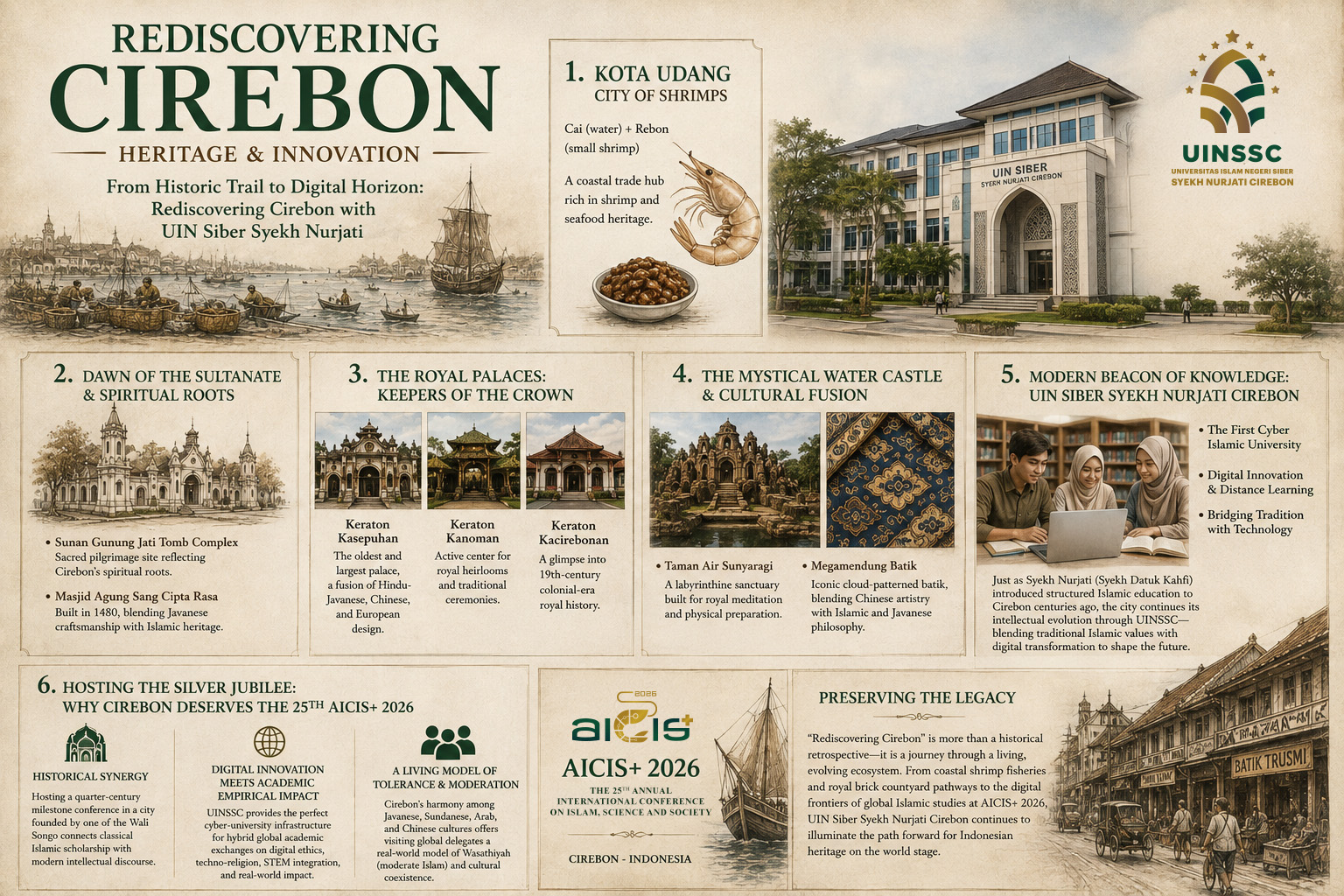
Nestled along the northern coast of West Java, Cirebon stands as a living museum where ancient maritime trade routes, Islamic spiritual history, and vibrant cultural fusion intersect. Popularly known as the "Kota Udang" (City of Shrimps), Cirebon’s identity is deeply rooted in its multi-layered past—a story shaped by Sundanese roots, Javanese traditions, Chinese influence, and Middle Eastern trade. To walk through Cirebon today is to step into a centuries-old narrative that bridges royal heritage, digital academic innovation, and global Islamic scholarship.
1. Why Cirebon is Called the "City of Shrimps"
The moniker Kota Udang is tied directly to the city's geographical origin and historical identity:
- Etymological Roots (Cai & Rebon): Historical manuscripts show that "Cirebon" derives from the Sundanese words "Cai" (water) and "Rebon" (small shrimp). Early coastal inhabitants earned their living harvesting small shrimps to produce traditional fermented shrimp paste (terasi) and shrimp crisp (petis).
- A Coastal Trade Hub: Positioned strategically along the Java Sea, Cirebon’s mangrove ecosystems and estuaries provided a rich environment for shrimp harvesting, making seafood its primary economic driver for centuries.
2. The Dawn of the Sultanate & Spiritual Roots
Cirebon took a pivotal historical turn in the 15th century under Sunan Gunung Jati (Syarif Hidayatullah), one of the nine revered Islamic saints (Wali Songo) of Java.
- Sunan Gunung Jati Tomb Complex: Located in Gunung Sembung, this sacred site remains an active pilgrimage destination reflecting Cirebon's spiritual foundational roots.
- Masjid Agung Sang Cipta Rasa: Built in 1480, this historic wooden mosque seamlessly blends Javanese architectural craft with Islamic heritage.
3. The Royal Palaces: Keepers of the Crown
Unlike cities with a single royal center, Cirebon houses multiple living royal palaces (Keraton):
- Keraton Kasepuhan: The oldest and largest palace, showcasing a unique mixture of Hindu-Javanese, Chinese porcelain, and European design elements.
- Keraton Kanoman: Active center for royal heirlooms and traditional ceremonies.
- Keraton Kacirebonan: Offers an intimate view into 19th-century colonial-era royal history.
4. The Mystical Water Castle & Cultural Fusion
- Taman Air Sunyaragi: A unique labyrinthine fortress built from brickwork and coral rocks, originally designed as a sanctuary for royal meditation and physical preparation.
- Megamendung Batik: Cirebon's world-famous cloud-patterned batik, showcasing vivid Chinese artistic aesthetics blended with Islamic and Javanese philosophy.
5. Modern Beacon of Knowledge: UIN Siber Syekh Nurjati Cirebon
Just as Syekh Nurjati (Syekh Datuk Kahfi) introduced structured Islamic education to Cirebon centuries ago, the city continues its intellectual evolution through UIN Siber Syekh Nurjati Cirebon (UINSSC).
- The First Cyber Islamic University: Designated as Indonesia's flagship Cyber Islamic University by the Ministry of Religious Affairs, UINSSC uses cutting-edge digital infrastructure and Distance Learning Programs (PJJ) to make higher education globally accessible.
- Bridging Tradition with Technology: The university represents a fusion of traditional Islamic values and modern digital transformation, positioning Cirebon as an emerging center for techno-religious studies.
6. Hosting the Silver Jubilee: Why Cirebon Deserves the 25th AICIS+ 2026
In 2026, Cirebon steps onto the world stage as the official host for the 25th Annual International Conference on Islamic Studies (AICIS+ 2026), co-hosted by UIN Siber Syekh Nurjati Cirebon and the Ministry of Religious Affairs. Cirebon stands as the ideal host for this historic silver jubilee for several key reasons:
- Historical Synergy: Hosting a quarter-century milestone conference in a city founded by one of the Wali Songo creates a profound symbolic connection between classic Islamic scholarship and modern intellectual discourse.
- Digital Innovation Meets Academic Empirical Impact: As the event focuses on digital ethics, techno-religion, STEM integration, and empirical research with real-world national impact, UINSSC provides the perfect cyber-university infrastructure to facilitate hybrid global academic exchanges.
- A Living Model of Tolerance & Moderation: Cirebon's centuries-old harmony among Javanese, Sundanese, Arab, and Chinese cultures offers visiting global delegates a real-world model of moderate Islam (Wasathiyah) and cultural coexistence.